Before understanding lucid dreams, it's important to understand typical dreams
NREM
The Non-rapid eye movement phase (NREM) is in the earlier phase of sleep and is a consolidation of 4 different sleeping stages.
The NREM phase of sleep has more fragmented, shorter and detailed dreams tied to daily life.
2 phases of sleep: REM and NREM (Payne and Nadel)
REM
The rapid eye movement phase (REM), is present mainly in the middle of the sleep cycle.
The REM phase has longer, less detailed, and more confusing dreams. REM dreams are recalled better by ~30% due to an increase in cortisol (stress hormone) levels.

<img src="https://myzden.com/cdn/shop/articles/zDen_sleep_cycle.jpg?v=1748492667&width=1100" alt="Understanding Sleep Cycles: Why Deep and REM Sleep Matter Most – zDen LLC"/>
Senses involved in dreams (Hejiden et al.)
Most dominant senses in dreams (ordered from most to least)
-
vision
-
audio
-
touch
-
smell
-
taste
Most dominant senses in happy dreams
-
visual (more color)
-
taste
-
smell
Most dominant senses in nightmares
-
sound
-
touch
less visual
Emotions and nostalgia in dreams
(Payne and Nadel), (Yang et al.).
More emotionally dense dreams have more vivid detail, and emotional dreams are more memorable, therefore more detailed dreams tend to be more memorable.
Nostalgia creates more memorable dreams as a result of an intense bittersweet emotion
Reasons for dreaming (Nir and Tononi)
Likely reasons for dreaming included processing emotions, solidifying memories, and problem solving. This part is important to know because problem solving would be a mechanism specifically associated with lucid dreaming.
Phenomenology V. Neurophysiology (Nir and Tononi).
Dreams are a combination of brain activity, and personal experience. Dream phenomenology is the personal experience’s effect on dreams, and neurophysiology is the brain and nerve activity that causes dreams to happen. Neurophysiology can include gamma and theta waves which were proven to be associated with dreams . This is a very simple point, but it’s important because it shows that dreams are different and range from person to person based on their physical body and brain activity, as well as the things they have experienced in their life.
Parts of the brain involved in dreaming (yang et al.)
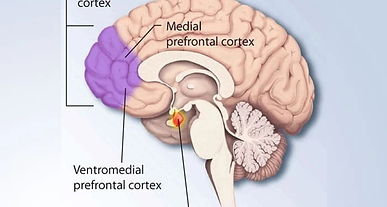
The parts of the brain involved in dreaming include the medial prefrontal cortex (involved in thoughts and memories), the hippocampus (specializes in memories), the amygdala (manages emotions), the striatum (makes nostalgia feel rewarding)
<img src="https://sp-ao.shortpixel.ai/client/to_webp,q_glossy,ret_img,w_702,h_375/https://www.psypost.org/wp-content/uploads/2017/05/prefrontal-cortex-702x375.jpg" alt="In depressed people, the medial prefrontal cortex exerts more control over other parts of the brain"/>
<img src="https://cdn.flintrehab.com/uploads/2020/04/hippocampus-damage-1.png" alt="Hippocampus Damage: How to Improve Memory After Injury"/>


<img src="https://cdn.flintrehab.com/uploads/2020/07/illustration-of-amygdala.png" alt="Damage to the Amygdala: Functions, Symptoms, & Treatments"/>

<img src="https://cdn-useast.purposegames.com/images/game/bg/318/NGikiibb3YQ.png?s=1400" alt="Corpus Striatum - lateral view Quiz"/>